Small backyard design ideas
Organize a limited footprint around one useful outdoor moment, a clear route, and layered planting.
Read the small backyard guide →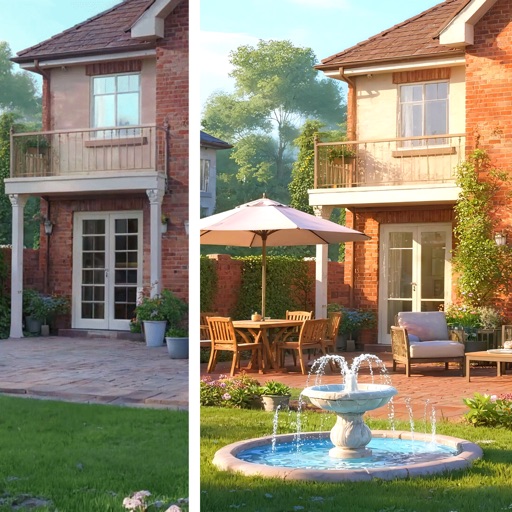 Garden AILandscape ideas, visualized
Try your garden
Garden AILandscape ideas, visualized
Try your garden
Good landscape ideas begin with the way a space is used: how people move through it, where light falls, how much maintenance is realistic, and what should feel different when the work is done. These guides turn common garden questions into practical prompts and AI-generated visual directions.
Editorially reviewed July 16, 2026 · AI concepts are inspiration, not construction plans.
Choose the guide that best matches the decision you are trying to make. Each page explains the design logic, real-world checks, and questions to discuss before building or planting.
Organize a limited footprint around one useful outdoor moment, a clear route, and layered planting.
Read the small backyard guide →Use repeatable plant groups, accessible paths, and realistic maintenance choices without making the garden feel bare.
Read the low-maintenance guide →Explore restrained materials, a slower walking rhythm, and one focal pause for a narrow passage.
Read the Zen garden guide →Map changing light, keep a dry route, and organize foliage around one useful destination.
Read the shade garden guide →Build a clear hierarchy, restrain materials, and check drainage, heat, glare, and upkeep.
Read the modern garden guide →Test reversible improvements before deciding whether surfaces or structures need work.
Read the patio makeover guide →Plan access, visibility, drainage, utilities, and rules before choosing curb appeal details.
Read the front yard guide →Map routes, rest, gates, surfaces, and recurring habits before choosing decorative details.
Read the dog-friendly guide →Keep the doorway, route, drainage, and fixed boundaries visible while testing one clear use.
Read the courtyard guide →Plan access, flexible use, planting depth, drainage, roots, and upkeep before choosing surfaces.
Read the no-grass guide →Interrupt a dominant sightline with an offset route and two connected use zones.
Read the long narrow guide →Identify the exposed view, reposition the activity, then add only the local layer it needs.
Read the privacy guide →Keep the door, drain, parapet, services, and maintenance route visible.
Read guide →Start with the house door, steps, railing, drainage gaps, and the path people already take.
Read guide →A useful flower-bed layout starts with a deliberate edge, enough visual depth for layers, repeated groups, and reachable maintenance points.
Read guide →Observe where water travels, where the ground is already gentle enough to pause, and which route follows the contour.
Read guide →Do not force every feature to follow an irregular fence.
Read guide →Begin with the house door, gate, shed, storage, and maintenance stops.
Read guide →A level, wide backyard photo can help an AI visualizer preserve recognizable boundaries and compare layout ideas.
Read guide →Protect door swing, egress, drain access, railing clearance, and the route needed to move every container.
Read guide →A neglected corner becomes useful when it supports one small activity or planting composition.
Read guide →Keep the path, steps, landing, door swing, lighting, address, and service access easy to read.
Read guide →Preserve vehicle movement, pedestrian access, visibility, utility covers, drainage, and the public edge.
Read guide →Treat the fence as a boundary that may still need inspection and repair.
Read guide →Protect the door swing, threshold, carrying route, roof runoff, wall inspection, and tree roots.
Read guide →A garden office landscape should begin with the repeated door-to-door journey, a clear threshold, service access, drainage, and the view from the desk.
Read guide →Start with the path from the kitchen or house door to the table, gate, and rest of the garden.
Read guide →A cottage-garden direction works best when a simple path, a few repeated planting groups, maintenance access, and one quiet seat organize the visual abundance.
Read guide →Plan movable seating, containers, and temporary layers around the lease and fixed site conditions.
Read guide →A useful garden focal point is visible from the main approach, proportionate to the space, and supported rather than crowded by surrounding elements. Start with the view and route, then test one focal object or planting mass before adding secondary accents.
Read guide →Good garden seating placement starts with how people reach the seat, what they face, and what remains accessible around it. Test the position with movable chairs before committing to surfaces, structures, or permanent furniture.
Read guide →An indoor-outdoor garden transition feels coherent when the first route is obvious, the threshold stays safe and clear, and a few colors or materials repeat across the view. Visual continuity does not require changing doors or rebuilding the house.
Read guide →A garden view from a window improves when one composition reads clearly inside the frame: an open foreground, a middle layer, and one calm destination. Start with the rooms used every day before rearranging the whole garden.
Read guide →A garden material palette is clearer when one dominant surface character, one supporting texture, and one accent repeat across the space. Treat the AI image as a coordination reference, not a product specification or proof of suitability.
Read guide →Garden color palette ideas work best when they begin with fixed colors—the house, fence, paving and mature structure—then add one dominant mood and a restrained accent. The palette is a visual brief, not a plant list.
Read guide →Formal garden design is defined by readable axes, balanced masses, repeated forms, and controlled edges. Begin with the building and route; symmetry should support how the space works rather than hide drains, gates, roots, or irregular boundaries.
Read guide →A farmhouse garden direction feels coherent when the working route stays obvious, materials look practical rather than theatrical, and informal planting masses soften the edges. Use the style as a visual brief, not a claim about historical authenticity.
Read guide →A walled garden needs a clear route, an open center or destination, and planting shapes that respect wall access, drainage and changing light. The walls may create shelter or shade, but an image cannot verify the real microclimate or wall condition.
Read guide →A large backyard layout becomes useful when a strong route connects a few generous zones and existing trees or views anchor the composition. Avoid scattering many small features across the lawn; give each area enough space to feel intentional.
Read guide →A square garden layout does not need to repeat the fence on every side. An offset route, deeper planting on one edge, and a destination away from the exact center can create depth while keeping access and fixed conditions clear.
Read guide →New-build garden ideas should begin with boundaries, thresholds, services, drainage and the route used every day. Establish one flexible use and realistic future planting zones before committing to surfaces or expecting an instant mature garden.
Read guide →A neglected garden makeover should start by identifying what is fixed, healthy, useful, unsafe, or unknown. Clear access and reveal the site gradually; do not treat an overgrown photograph as permission to remove mature vegetation or rebuild everything.
Read guide →Garden sightlines organize the experience between the door, path, seat, gate and distant boundary. Choose one primary view, preserve the working route, and use partial screening only where it creates depth without hiding constraints.
Read guide →A family garden layout works when the daily route stays clear, adults can understand the whole space, storage contains movable clutter, and open ground can change with household needs. The concept is not a child-safety assessment or play-equipment plan.
Read guide →Garden room layout ideas work when each area has one purpose, the route between them feels natural, and planting or material changes define edges without becoming barriers. Start with two connected rooms rather than dividing every part of the yard.
Read guide →For a useful AI garden design photo, stand in a repeatable position, keep the camera level, and include the complete ground plane, boundaries, doors, gates, drains, utilities and mature structure. Even a good image cannot provide measurements or hidden site information.
Read guide →Compare AI garden designs only when they use the same source view and preserve the same fixed conditions. Score each concept on route, use, maintenance, retained features, realism and unanswered questions—not on visual drama alone.
Read guide →Map dependencies, preserve future access and give each phase a usable stopping point.
Plan a garden redesign in phases →Connect planted edges and a quiet refuge while retaining access, drainage and everyday use.
Plan a wildlife-friendly layout →Map the exposed direction and protect one activity zone without assuming a solid barrier is the answer.
Plan a wind-aware layout →Retain the mature tree and treat its root zone as an unknown before placing permanent features.
Plan around an existing tree →Identify the equipment and service face, then preserve the provider’s required access.
Plan around utility equipment →Audit the garden after seasonal growth recedes, then organize persistent forms and useful emptiness.
Plan winter structure →Define the intended user and sensory purpose before placing reachable cues along a clear route.
Plan a sensory sequence →Observe the line fully open, then protect the carrying route and model-specific work area.
Plan around a clothesline →Confirm equipment-specific access and airflow before testing a removable visual screen.
Plan around outdoor equipment →Observe lid, handle and rolling movements before screening a bin from one public view.
Plan a bin screen →Use a movable umbrella trial to learn where and when shade matters before permanent work.
Compare shade options →Compare reach, soil, water and circulation conditions for the actual gardener and site.
Compare garden beds →Photograph and map water movement in real rain, then stop before drainage design.
Run a rain check →A garden design brief should state the primary use, fixed conditions, must-keep features, desired feeling, maintenance limit, visual references, unknowns and stopping points. It should distinguish what is known from what still needs measurement or professional advice.
Read guide →The most damaging AI garden design mistakes are hiding drains or services, moving boundaries, inventing level ground, removing mature structure, and treating visual materials or plants as verified choices. Keep a fixed-condition checklist beside every generated image.
Read guide →Note boundaries, doors, gates, steps, utilities, drainage points, and anything that must remain accessible.
Record full sun, shade, wind, wet spots, and dry areas over more than one part of the day.
Prioritize dining, play, planting, pets, entertaining, or quiet time instead of asking one small space to do everything.
Be honest about watering, pruning, cleaning, storage, and seasonal work before selecting materials or plants.
An AI garden image is useful when it helps you name what you want: a wider path, a more private seat, denser planting, or a calmer material palette. It cannot verify dimensions, utilities, plant suitability, drainage, structure, permits, or cost. Keep the parts that clarify your brief, then take the concept and your site notes to an appropriate local professional.
Use Garden AI to compare possibilities before the next design conversation.
AI-generated visualizations are concepts. Check local conditions and consult a qualified professional before construction or planting.