Assign one quiet purpose
A single movable chair makes the corner a short pause rather than a storage area.
 Garden AILandscape ideas, visualizedTry your garden
 A neglected corner becomes useful when it supports one small activity or planting composition. Keep the gate, drain, fence access, tree trunk, roots, and maintenance route visible before adding a chair, containers, or a deeper edge.
Editorially reviewed August 14, 2026.
This AI-generated comparison is visual inspiration, not a measured plan, specification, safety assessment, cost estimate, local approval, plant recommendation, or construction guarantee.
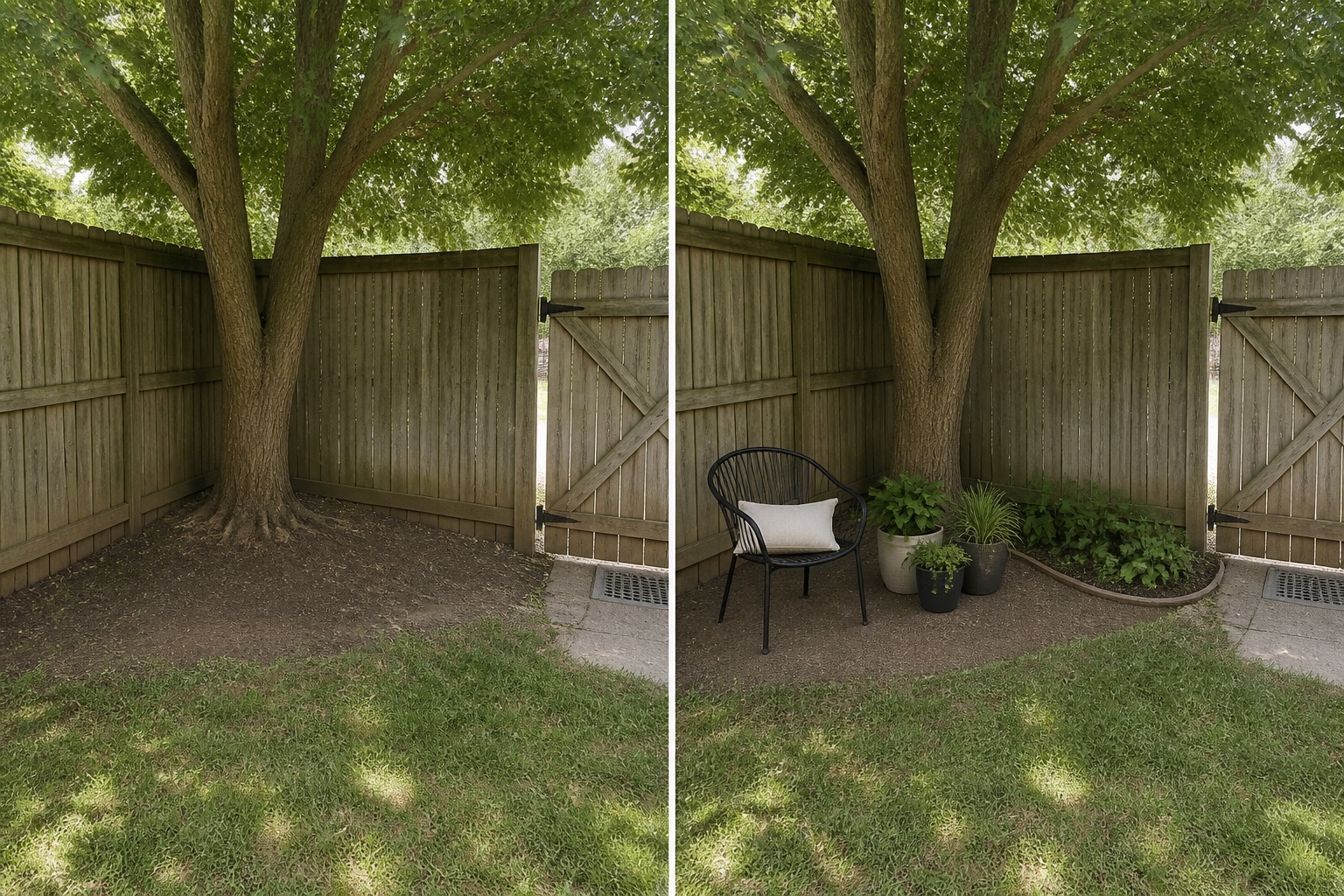
A single movable chair makes the corner a short pause rather than a storage area.
Containers and planting sit in restrained groups without encircling the trunk or closing the gate.
One soft planting line connects the two fences visually instead of filling the corner with unrelated objects.
The concept keeps the mature tree, visible roots, fence, gate, drain, lawn edge, shade, and ground level. It does not pave over roots, attach to the fence, or promise that the corner supports a particular plant.
Record doors, gates, paths, furniture movement, utilities, drains, roots, and maintenance access. Do not infer clearance from the image.
Note direct sun, shade, wind, overlooking, and views from inside across more than one time and season before choosing materials or plants.
Locate falls, low points, downpipes, drains, and recurring wet areas. Preserve existing outlets and seek appropriate advice before changing runoff or levels.
Check permissions, product information, plant suitability, mature size, toxicity, invasiveness, upkeep, and any safety requirements for the actual site.
Avoid piling soil around trunks, paving roots, blocking gate swing or drains, attaching structures to an unchecked fence, and forcing sun-loving plants into unknown shade. Stop for root disturbance, tree health concerns, drainage changes, structural screens, excavation, or boundary work.
Give it one role—such as a movable seat or planting composition—while protecting access, drainage, roots, light, and maintenance.
Keep the trunk flare and roots visible and seek appropriate arboricultural advice before excavation, level changes, paving, or added soil.
No. Some corners work better as breathing room or access. Add a purpose only when it supports real use.
Upload a level, wide photo to compare restrained concepts before making physical changes.
AI-generated visualizations are concepts. Verify measurements, conditions, drainage, access, structure, utilities, local rules, product information, plant suitability, and professional requirements before buying or building.