Create one internal geometry
A simple rounded central shape gives the eye a stable reference inside the irregular outline.
 Garden AILandscape ideas, visualizedTry your garden
 Do not force every feature to follow an irregular fence. Define one simple usable shape, keep the real route connected, and let the leftover wedges become planting or breathing room rather than filling each corner with a separate object.
Editorially reviewed August 14, 2026.
This AI-generated comparison is visual inspiration, not a measured plan, specification, safety assessment, cost estimate, local approval, plant recommendation, or construction guarantee.
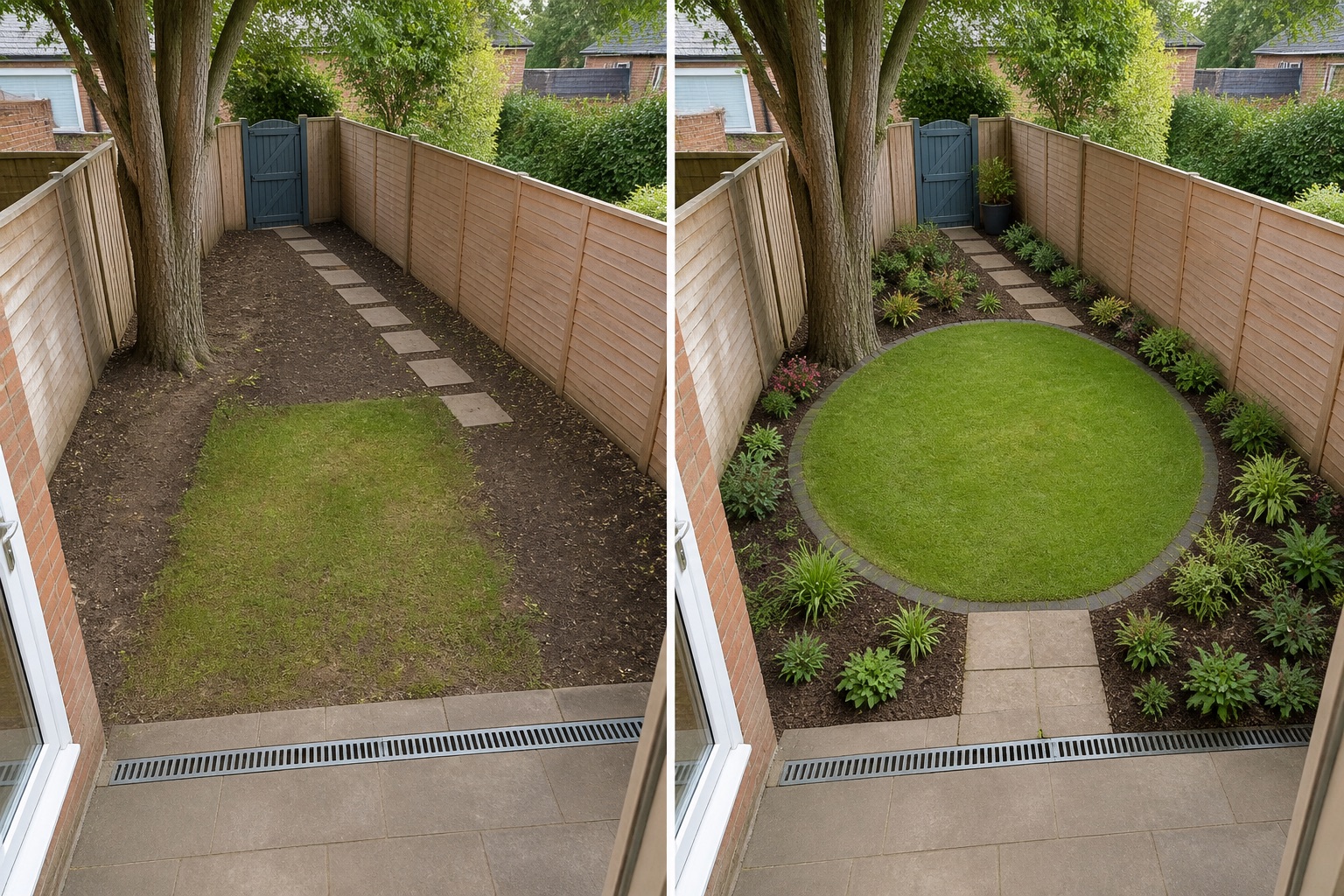
A simple rounded central shape gives the eye a stable reference inside the irregular outline.
The gate path remains direct instead of bending merely to copy every boundary angle.
Planting pockets and one movable container use leftover areas without turning them into cramped miniature rooms.
The concept keeps every angled boundary, gate, mature tree, doorway, drain, level, and pointed corner. It does not square the plot, move a fence, remove roots, or claim extra usable area.
Record doors, gates, paths, furniture movement, utilities, drains, roots, and maintenance access. Do not infer clearance from the image.
Note direct sun, shade, wind, overlooking, and views from inside across more than one time and season before choosing materials or plants.
Locate falls, low points, downpipes, drains, and recurring wet areas. Preserve existing outlets and seek appropriate advice before changing runoff or levels.
Check permissions, product information, plant suitability, mature size, toxicity, invasiveness, upkeep, and any safety requirements for the actual site.
Avoid tracing every angle, placing rectangular objects into pointed tips, hiding access behind planting, or giving every leftover wedge a different purpose. Stop for boundary changes, unknown ownership, tree-root work, drainage alterations, retaining, or level changes.
Map the real boundaries and routes, then test one clear internal geometry that supports the main use without copying every angle.
Choose a low-commitment supporting role such as planting or a movable focal container, while keeping fence and maintenance access realistic.
No. Circles or curves are visual options, not universal solutions. The best organizing shape depends on routes, levels, fixed objects, and how the space is used.
Upload a level, wide photo to compare restrained concepts before making physical changes.
AI-generated visualizations are concepts. Verify measurements, conditions, drainage, access, structure, utilities, local rules, product information, plant suitability, and professional requirements before buying or building.