Keep the daily route empty
The path from the back door to the gate remains clear, including room to reach the visible drain.
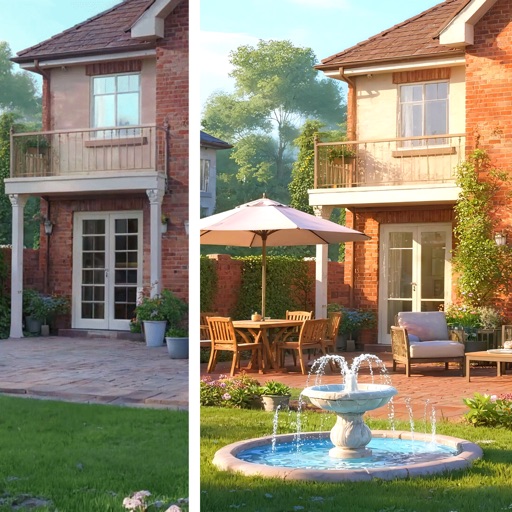 Garden AILandscape ideas, visualizedTry your garden
 A renter-friendly garden starts with the lease, written permission, and an inventory of fixed conditions. Protect the route, drain, gate, fence, soil, and mature tree, then test the space with movable seating, freestanding containers, and other reversible layers that can be removed without damage.
Editorially reviewed August 14, 2026.
This AI-generated comparison is visual inspiration, not a measured plan, specification, safety assessment, cost estimate, local approval, plant recommendation, or construction guarantee.
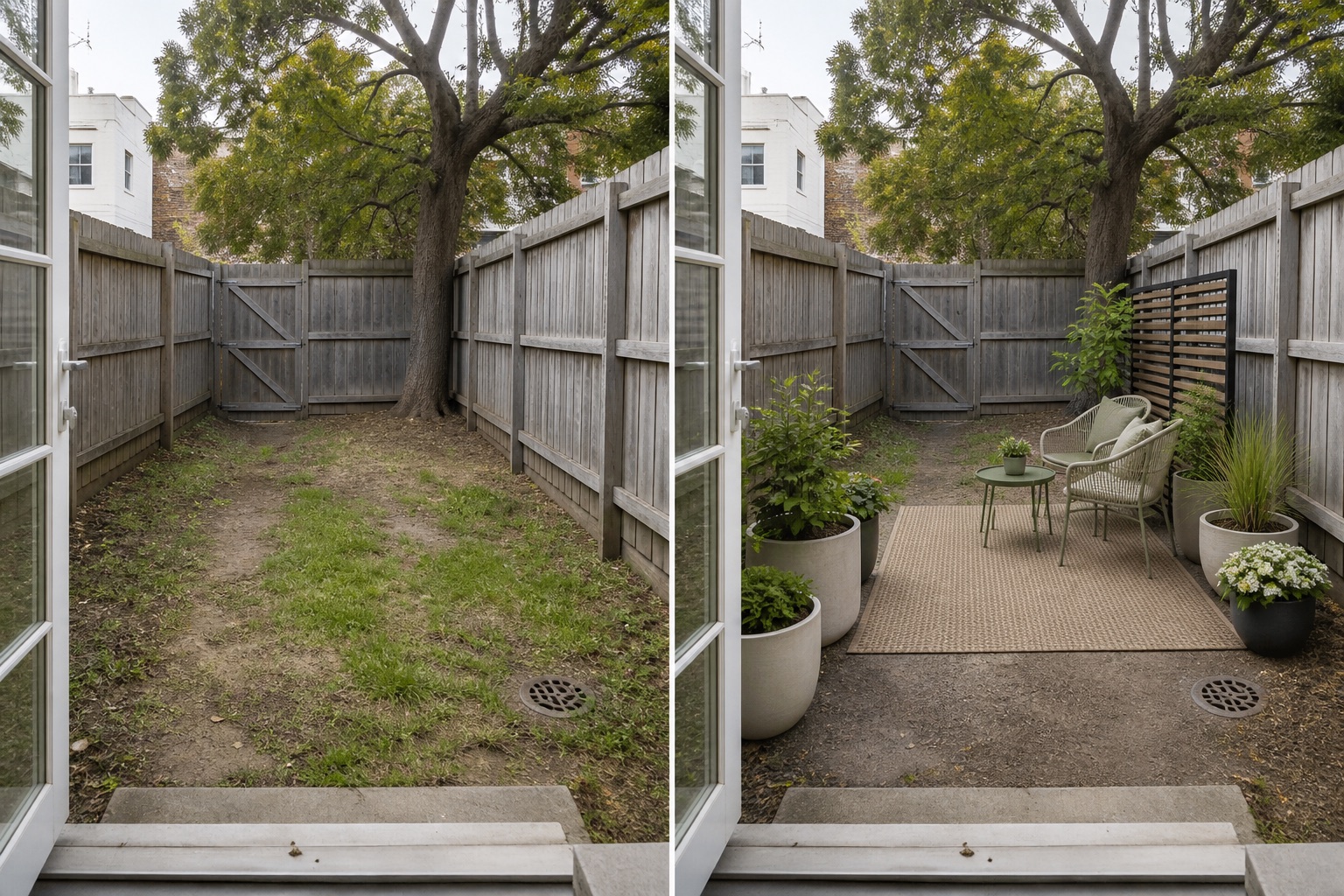
The path from the back door to the gate remains clear, including room to reach the visible drain.
Movable containers and a freestanding planter screen create depth without fixing anything to the fence or changing the ground.
Two lightweight chairs, a small table, and a rollable outdoor rug establish a sitting area that can be packed away or moved.
The concept keeps the fence, rear gate, back door, threshold, existing ground, drain, mature tree, levels, and boundaries. It does not attach anything to the property, dig, pave, alter drainage, remove vegetation, or imply landlord approval.
Record doors, gates, paths, furniture movement, utilities, drains, roots, and maintenance access. Do not infer clearance from the image.
Note direct sun, shade, wind, overlooking, and views from inside across more than one time and season before choosing materials or plants.
Locate falls, low points, downpipes, drains, and recurring wet areas. Preserve existing outlets and seek appropriate advice before changing runoff or levels.
Check permissions, product information, plant suitability, mature size, toxicity, invasiveness, upkeep, and any safety requirements for the actual site.
Do not drill into fences or walls, cover drains, assume loose coverings suit every surface, introduce plants without checking local suitability, or treat verbal approval as permanent permission. Stop before digging, pruning established plants, changing irrigation or drainage, adding wiring or lighting, loading balconies or decks, or making any change the lease or owner has not clearly allowed.
It is removable, does not damage or conceal the property, preserves access and drainage, and fits the written lease or permission. Portability alone does not override building rules or site constraints.
Only when the lease and property owner clearly allow it and the location is suitable. Containers are often easier to reverse, but their weight, drainage, stability, and plant choice still need checking.
Start with cleaning and observation, then test movable seating, freestanding containers, and a removable surface only where it will not trap moisture, create a trip hazard, or obstruct access.
Upload a level, wide photo to compare restrained concepts before making physical changes.
AI-generated visualizations are concepts. Verify measurements, conditions, drainage, access, structure, utilities, local rules, product information, plant suitability, and professional requirements before buying or building.