Dog-friendly garden ideas

Design around the routes your dog already chooses.

A useful pet-friendly backyard starts with observed behavior: where your dog runs, waits, rests, digs, watches, drinks, and approaches a gate. Keep those needs legible before adding planting or decorative features.

Editorially reviewed July 29, 2026.

This AI-generated comparison is inspiration, not a measured plan, veterinary or behavioral advice, plant-safety assessment, construction detail, or escape-proofing guarantee.

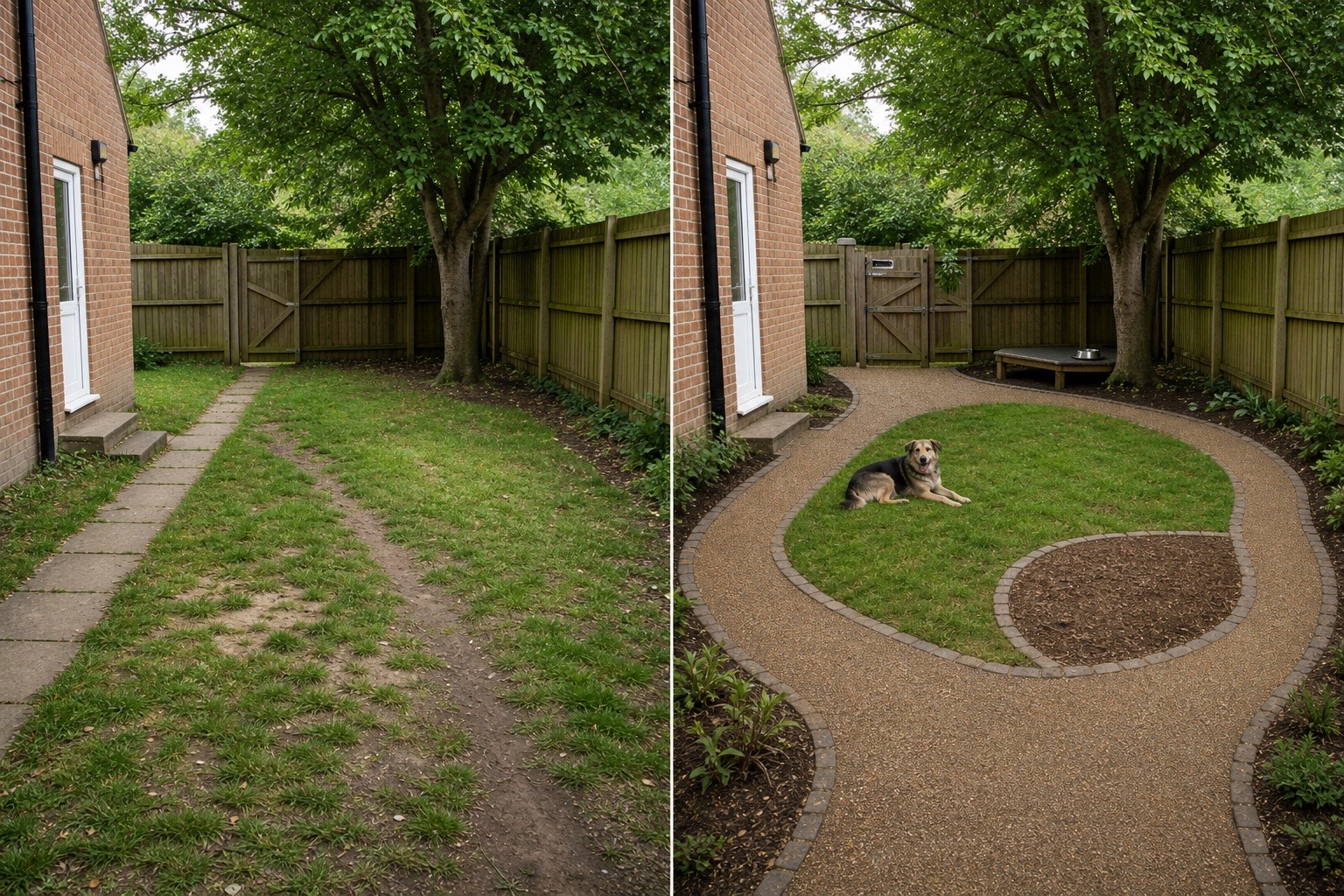
Before-and-after AI concept of the same fenced backyard from the same camera position, retaining the house, door, mature tree, fence, gate, downspout, and lawn while adding a loop route, shaded resting platform, water bowl, digging zone, and gate pause area
Before → AI concept. The house, door, mature tree, fence, gate, downspout, and ground level remain visible. The route and activity zones are conceptual; their materials, dimensions, and safety have not been verified.
Three behavior-led decisions

Give movement, rest, and habits a clear place.

01

Keep a continuous patrol route

Map the lines your dog repeatedly follows along doors, fences, and viewing points. A continuous route can absorb that movement without forcing it through fragile planting, but its width, edge, traction, drainage, temperature, and accessibility must be checked on site.

02

Create a shaded pause with water nearby

Place a calm resting option where your dog can see familiar activity without blocking a doorway or gate. Observe changing sun and heat, keep fresh water accessible, and ask a veterinarian about needs specific to your dog's age, health, coat, and climate.

03

Redirect digging instead of promising to stop it

If digging is a recurring behavior, test a clearly bounded, supervised loose-material zone away from fences, utilities, roots, and structures. Training and individual behavior still matter; a garden feature is not a behavioral guarantee.

Unchanged conditions

The concept preserves the fixed backyard framework.

The building wall, back door, steps, downspout, boundary fence, gate, mature tree, lawn center, and general grade stay in place. The image does not confirm boundaries, gaps, gate latches, fence condition, underground services, root zones, drainage, surface temperature, slip resistance, or whether any material is suitable for a particular dog.

Dog-friendly garden checklist

Verify what the concept cannot know.

01

Audit exits and edges

Inspect gates, latches, fence bottoms, climbable objects, squeeze points, doors, deliveries, and shared access with your dog's real size and behavior in mind. Supervision remains necessary.

02

Test surfaces in real weather

Check traction, drainage, heat, sharpness, cleanliness, wear, and maintenance when wet, dry, hot, or cold. Do not assume a surface is paw-safe from its appearance.

03

Verify every plant and material locally

Identify existing and proposed plants, mulches, treatments, fertilizers, pest controls, and stored products. Confirm risks for your individual animal with a veterinarian and reliable local sources before purchase or access.

04

Separate busy transitions

Plan how people, pets, bins, bikes, tools, and visitors move through doors and gates. A controlled pause area may help, but it is not a substitute for a secure enclosure or handling routine.

Questions people ask

Dog-friendly garden FAQ

What should I plan first in a dog-friendly garden?

Observe your dog over several days and map repeated routes, gate behavior, sunny and shaded resting places, toilet areas, digging, chasing, and reactions to neighboring activity. Then inspect boundaries, access, drainage, surfaces, and hazards before styling the space.

Which plants are safe for dogs?

There is no responsible universal list for every location, animal, plant variety, exposure, or product treatment. Identify plants precisely and verify each one with your veterinarian and authoritative local sources. Restrict access when an identification or risk is uncertain.

When should I stop and get specialist help?

Pause for veterinary advice after suspected ingestion, exposure, overheating, injury, or unexplained symptoms. Get appropriate local help before changing drainage, excavating, working near utilities or major roots, altering structures or boundaries, or relying on a fence or gate to contain an escape-prone dog.

Your space, visualized

Explore a layout without treating the image as a safety check.

Upload a wide, level photo that includes doors, gates, fences, ground, shade, and fixed services. Compare visual directions, then verify every practical and animal-specific decision separately.

AI-generated visualizations are concepts. Verify your dog's individual needs, plant and material risks, measurements, boundaries, utilities, drainage, access, climate, local rules, and professional requirements before buying, planting, digging, or building.