Modern calm
Clean lines · warm stone
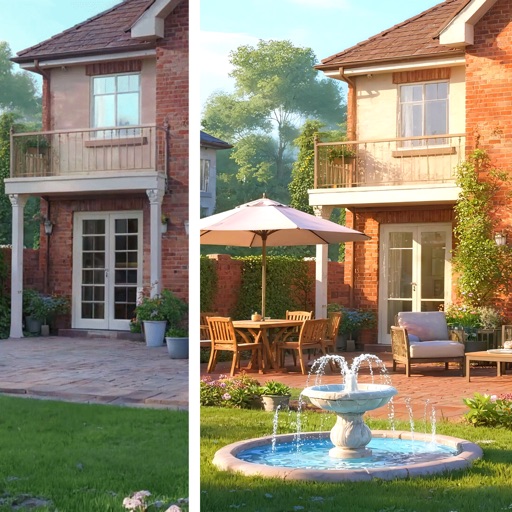 Garden AILandscape ideas, visualized
Upload a photo and explore realistic garden directions in seconds—from quiet modern patios to layered cottage planting.
Drag to compare
Keep the character of your space.
Explore ideas without the guesswork.
Bring a clearer vision to the conversation.
Use styles as a starting point, then shape the details around how you live outside.
Clean lines · warm stone
Layered · welcoming
Quiet · considered
These visual guides pair a real-world design question with an AI-generated concept. Use them to spot what you want to explore in your own photo.
Give a compact garden a clearer purpose.
Explore guide → Easy careBuild a lush feeling from repeatable choices.
Explore guide → Calmer moodFind a quieter use for an overlooked passage.
Explore guide → Changing lightOrganize a shaded yard before choosing plants.
Explore guide → Clear hierarchyBalance clean lines with drainage, comfort, and upkeep.
Explore guide → Right-sized changeCompare reversible improvements with permanent work.
Explore guide → Welcoming accessBalance curb appeal with routes, visibility, services, and rules.
Explore guide → Living with dogsPlan routes, rest, gates, surfaces, and habits before styling.
Explore guide → Enclosed spaceProtect the route, then build one useful outdoor room.
Explore guide → Lawn-free layoutDivide the ground into movement, use, planting, and drainage.
Explore guide → Long, thin plotBreak one corridor into a route and two connected pauses.
Explore guide → Targeted screeningMap one exposed sightline before enclosing the whole yard.
Explore guide → Practical layoutKeep the door, drain, parapet, services, and maintenance route visible.
Explore guide → Practical layoutStart with the house door, steps, railing, drainage gaps, and the path people already take.
Explore guide → Practical layoutA useful flower-bed layout starts with a deliberate edge, enough visual depth for layers, repeated groups, and reachable maintenance points.
Explore guide → Practical layoutObserve where water travels, where the ground is already gentle enough to pause, and which route follows the contour.
Explore guide → Practical layoutDo not force every feature to follow an irregular fence.
Explore guide → Practical layoutBegin with the house door, gate, shed, storage, and maintenance stops.
Explore guide → Practical layoutA level, wide backyard photo can help an AI visualizer preserve recognizable boundaries and compare layout ideas.
Explore guide → Practical layoutProtect door swing, egress, drain access, railing clearance, and the route needed to move every container.
Explore guide → Practical layoutA neglected corner becomes useful when it supports one small activity or planting composition.
Explore guide → Practical layoutKeep the path, steps, landing, door swing, lighting, address, and service access easy to read.
Explore guide → Practical layoutPreserve vehicle movement, pedestrian access, visibility, utility covers, drainage, and the public edge.
Explore guide → Practical layoutTreat the fence as a boundary that may still need inspection and repair.
Explore guide → Practical layoutProtect the door swing, threshold, carrying route, roof runoff, wall inspection, and tree roots.
Explore guide → Practical layoutA garden office landscape should begin with the repeated door-to-door journey, a clear threshold, service access, drainage, and the view from the desk.
Explore guide → Practical layoutStart with the path from the kitchen or house door to the table, gate, and rest of the garden.
Explore guide → Practical layoutA cottage-garden direction works best when a simple path, a few repeated planting groups, maintenance access, and one quiet seat organize the visual abundance.
Explore guide → Reversible layoutUse movable layers while preserving access, drainage, and the property itself.
Explore guide → Connected habitat zonesRetain access and daily use while testing planted edges, water and a quiet refuge.
Explore guide → Sheltered activity zoneMap the exposed direction, then test one semi-permeable shelter layer around the place you use.
Explore guide → Tree-first planningProtect the trunk and unknown root zone before testing reversible uses around an existing tree.
Explore guide → Service-first screeningRedirect one viewing angle while keeping provider-defined access and the equipment face clear.
Explore guide → Bare-season frameworkBalance one dark anchor, repeated standing forms, clear routes and deliberate open ground.
Explore guide → Purpose-led experienceOrganize reachable texture, scent, movement and sound around one clear route and pause point.
Explore guide → Everyday utility routeKeep the operating area, laundry route, gate and drain clear before softening the edges.
Explore guide → Equipment-first screeningProtect airflow and the service face, then redirect one sightline with a removable layer.
Explore guide → Collection-day routeKeep lids, handles and the rolling route usable while screening only the public view.
Explore guide → Shade comparisonTest where movable shade is actually useful before considering a permanent structure.
Explore guide → Bed-type decisionCompare reach, soil, watering and route constraints without assuming one bed type always wins.
Explore guide → Wet-weather observationRecord where water arrives, travels and lingers before proposing physical changes.
Explore guide →Garden AI is an idea and visualization tool—not a construction plan. Use it to explore, compare, and communicate what you want.
Start with the garden, patio, balcony, or yard you already have.
Explore garden styles and outdoor-living ideas that fit your goal.
Compare concepts, save favorites, and share the vision before you build.
Upload a photo, explore a direction, and make the next decision with more confidence.
AI-generated visualizations are concepts. Check local conditions and consult a qualified professional before construction or planting.