Widen one section
A varied-depth outline creates room for visual layers instead of maintaining a uniformly thin strip.
 Garden AILandscape ideas, visualizedTry your garden
 A useful flower-bed layout starts with a deliberate edge, enough visual depth for layers, repeated groups, and reachable maintenance points. Species selection comes later, after light, soil, water, climate, and mature size are verified.
Editorially reviewed August 14, 2026.
This AI-generated comparison is visual inspiration, not a measured plan, specification, safety assessment, cost estimate, local approval, plant recommendation, or construction guarantee.
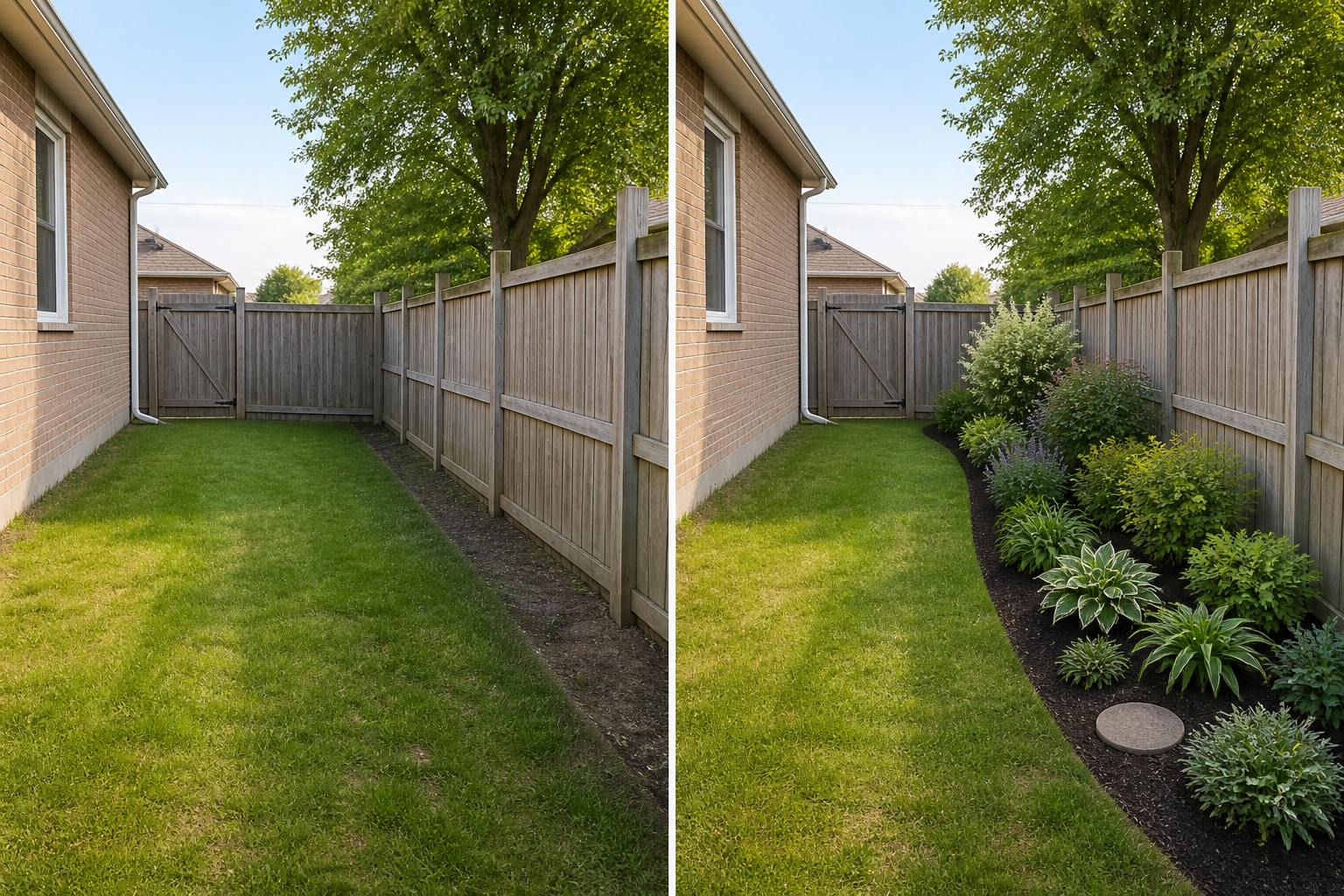
A varied-depth outline creates room for visual layers instead of maintaining a uniformly thin strip.
Low edge foliage, middle masses, and restrained taller anchors create hierarchy without naming species.
Small stepping points reduce the temptation to stand on soil or reach across the entire bed.
The concept keeps the fence, gate, lawn route, mature tree, drain, ground level, and existing boundary. It changes only the visual outline and layering of one planting bed; it does not specify plants, spacing, soil preparation, or irrigation.
Record doors, gates, paths, furniture movement, utilities, drains, roots, and maintenance access. Do not infer clearance from the image.
Note direct sun, shade, wind, overlooking, and views from inside across more than one time and season before choosing materials or plants.
Locate falls, low points, downpipes, drains, and recurring wet areas. Preserve existing outlets and seek appropriate advice before changing runoff or levels.
Check permissions, product information, plant suitability, mature size, toxicity, invasiveness, upkeep, and any safety requirements for the actual site.
Avoid selecting plants before recording conditions, making the bed too deep to reach, scattering one of everything, crowding roots or drains, and assuming the image shows mature spacing. Stop for tree-root disturbance, drainage changes, irrigation work, invasive plants, or uncertain toxicity.
Define the edge and maintenance reach first, then organize repeated low, middle, and taller layers around verified mature sizes and site conditions.
Not automatically. Arrange height around viewpoints, access, wind, and maintenance; verify each plant's real mature form locally.
There is no universal number. Repetition usually reads more clearly than a collection of isolated specimens, but the final palette depends on the site and upkeep capacity.
Upload a level, wide photo to compare restrained concepts before making physical changes.
AI-generated visualizations are concepts. Verify measurements, conditions, drainage, access, structure, utilities, local rules, product information, plant suitability, and professional requirements before buying or building.