Use a level wide frame
Avoid dramatic angles and include enough context to understand depth and boundaries.
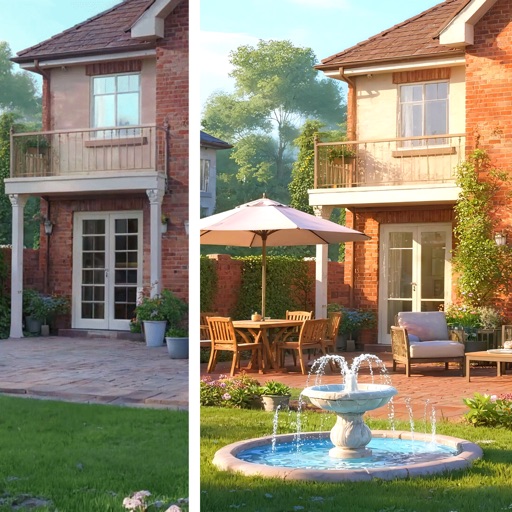 Garden AILandscape ideas, visualizedTry your garden
 For a useful AI garden design photo, stand in a repeatable position, keep the camera level, and include the complete ground plane, boundaries, doors, gates, drains, utilities and mature structure. Even a good image cannot provide measurements or hidden site information.
Editorially reviewed August 24, 2026.
This AI-generated comparison is visual inspiration, not a measured plan, specification, safety assessment, cost estimate, local approval, plant recommendation, or construction guarantee.
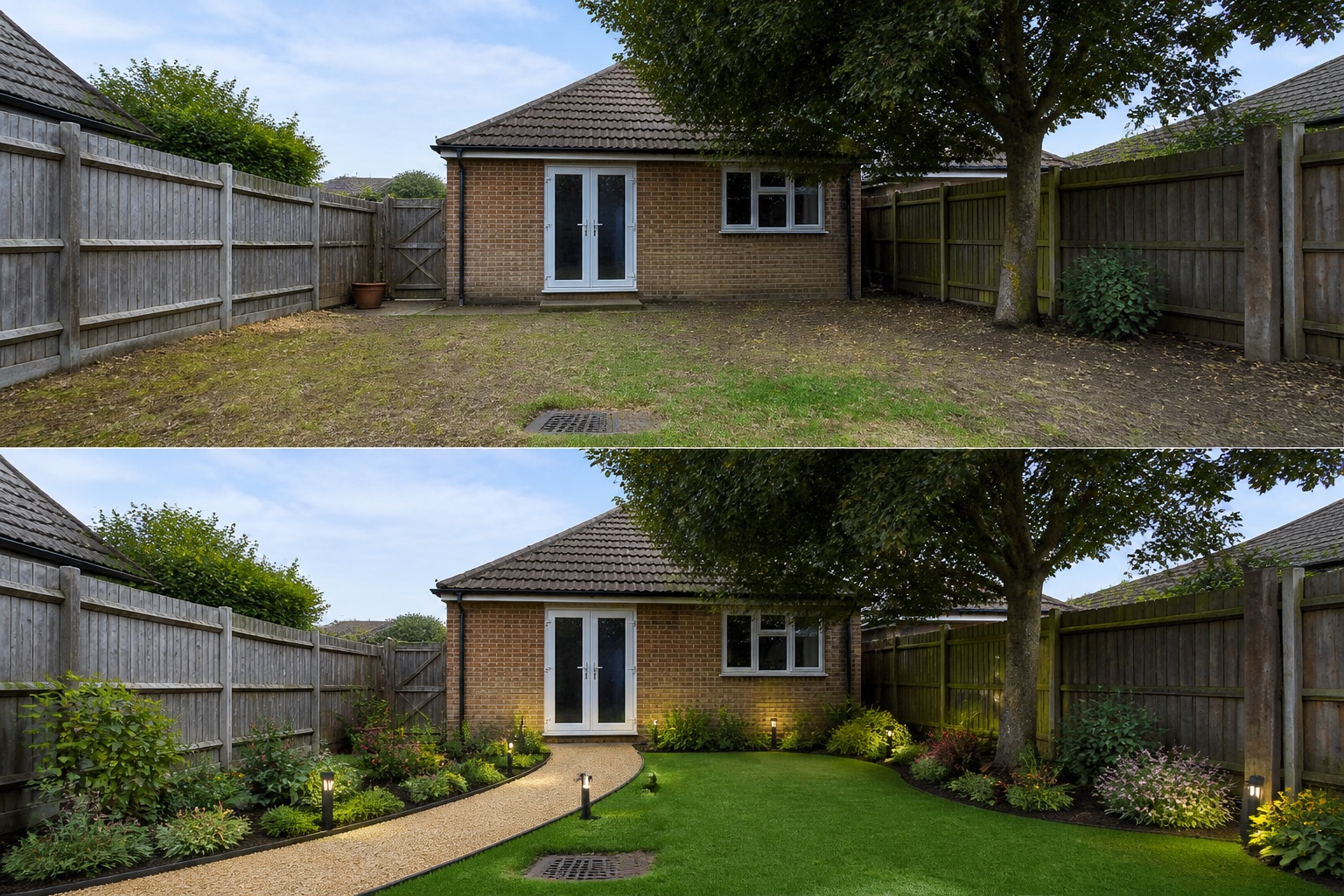
Avoid dramatic angles and include enough context to understand depth and boundaries.
Keep thresholds, drains, covers, downpipes, trees, steps and services visible.
Add side views for your own records while selecting one repeatable hero angle for comparisons.
The pictured house, boundaries, doors, gate, tree, drain, grade and chosen camera position remain unchanged between the comparison halves.
Record doors, gates, paths, furniture movement, utilities, drains, roots, and maintenance access. Do not infer clearance from the image.
Note direct sun, shade, wind, overlooking, and views from inside across more than one time and season.
Locate falls, low points, downpipes, drains, and recurring wet areas. Preserve existing outlets.
Check permissions, product information, plant suitability, mature size, toxicity, invasiveness, upkeep, and applicable safety requirements.
Stop if the only photo hides boundaries, crops the ground, uses an extreme lens, or omits the features that must remain accessible.
Use a level, wide, eye-level view that includes the main ground plane and fixed boundaries.
Move only genuinely movable clutter; leave fixed constraints visible and record anything temporarily moved.
No. Record dimensions, levels, utilities and site conditions separately.
Upload a level, wide photo to compare restrained concepts before making physical changes.
AI-generated visualizations are concepts. Check local conditions and consult a qualified professional before construction or planting.