Reserve the door-to-drain lane
The main strip stays open for movement, cleaning, and inspection.
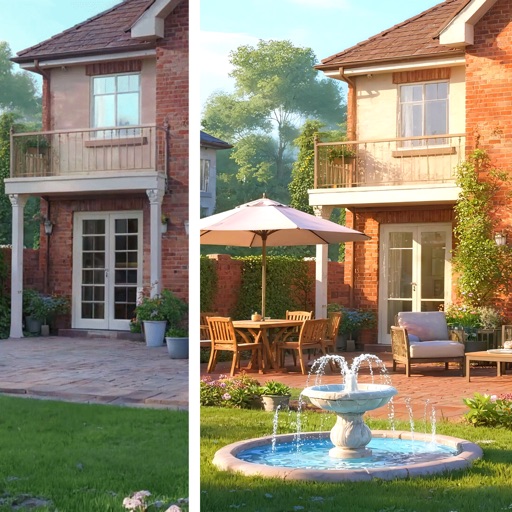 Garden AILandscape ideas, visualizedTry your garden
 Protect door swing, egress, drain access, railing clearance, and the route needed to move every container. Only after building rules and load limits are verified should a few movable elements be grouped around that clear zone.
Editorially reviewed August 14, 2026.
This AI-generated comparison is visual inspiration, not a measured plan, specification, safety assessment, cost estimate, local approval, plant recommendation, or construction guarantee.
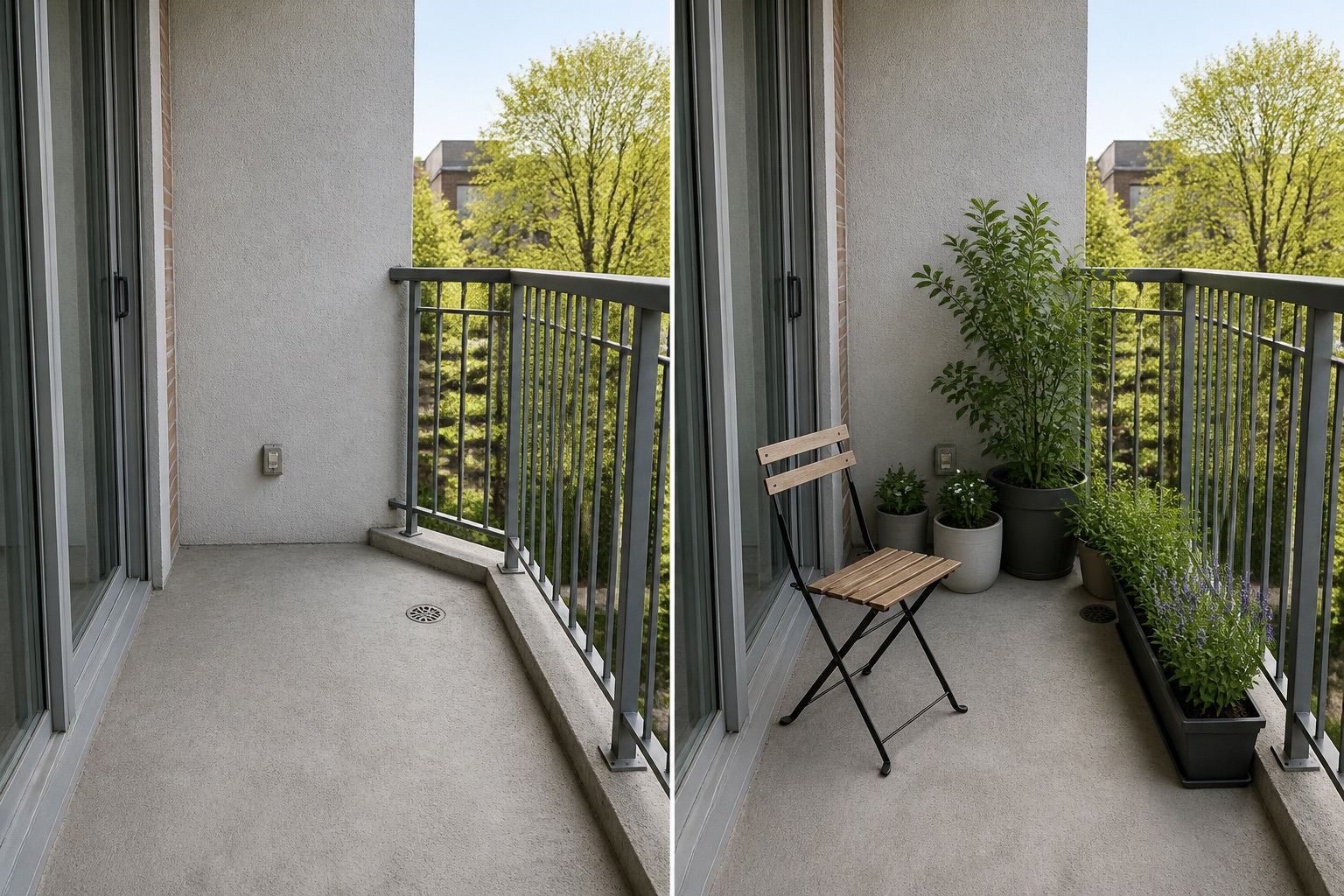
The main strip stays open for movement, cleaning, and inspection.
A small cluster creates visual depth while leaving the railing and other edge readable.
A movable chair gives the balcony a use without committing the remaining floor to furniture.
The concept keeps the slab, railing, door, wall, drain, outlet, level, and exposure. It does not attach anything to the railing, certify loads, change waterproofing, or guarantee wind or plant performance.
Verify ownership, permitted use, structural capacity, waterproofing condition, edge protection, emergency access, and building rules with appropriate qualified people before adding weight or fixtures.
Map outlets, falls, inspection points, equipment, doors, and maintenance routes. Containers and furniture must not conceal or obstruct them.
Record sun, reflected heat, wind, shade, and seasonal extremes. An image cannot establish wind stability, microclimate, or plant suitability.
Check how materials arrive, how containers are watered, where runoff goes, and how every item will be moved, cleaned, pruned, and stored.
Avoid hanging or fixing items without permission, blocking egress or drains, placing unstable objects near an edge, or assuming wet container weight. Stop for structural capacity, loose guards, waterproofing, wind anchoring, fire rules, electrical work, or building restrictions.
After rules and capacity are confirmed, protect the exit and drain first, then group a few movable containers outside the travel lane.
Do not assume permission or safety. Verify building rules, railing design, loads, wind, fixings, and falling-object risk.
Suitability depends on local exposure, climate, container, watering, and species. Use reliable local horticultural sources rather than the image.
Upload a level, wide photo to compare restrained concepts before making physical changes.
AI-generated visualizations are concepts. Verify measurements, conditions, drainage, access, structure, utilities, local rules, product information, plant suitability, and professional requirements before buying or building.