Avoid outlining all four sides equally
Vary the depth and visual weight of edge zones so the square is less dominant.
 Garden AILandscape ideas, visualizedTry your garden
 A square garden layout does not need to repeat the fence on every side. An offset route, deeper planting on one edge, and a destination away from the exact center can create depth while keeping access and fixed conditions clear.
Editorially reviewed August 24, 2026.
This AI-generated comparison is visual inspiration, not a measured plan, specification, safety assessment, cost estimate, local approval, plant recommendation, or construction guarantee.
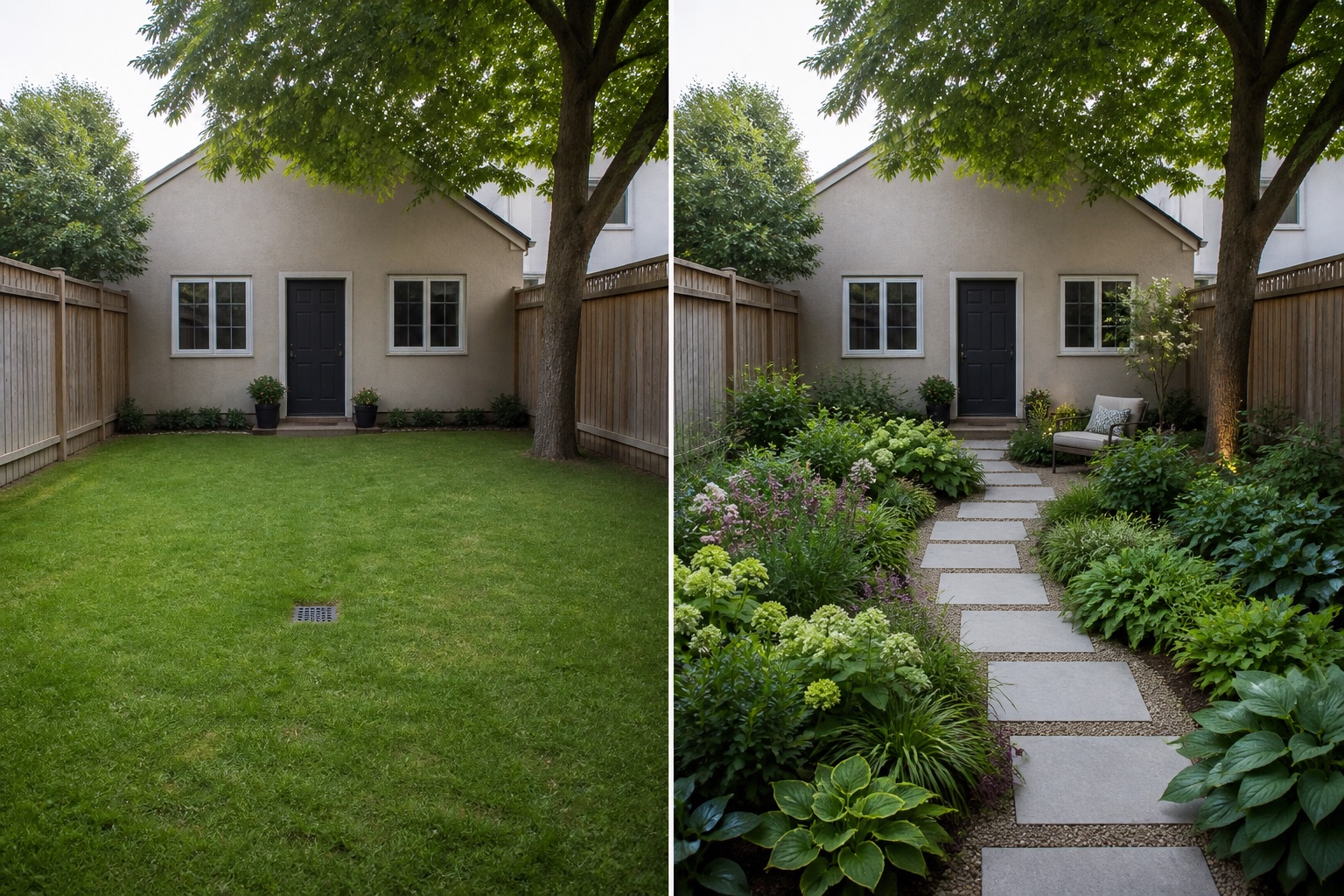
Vary the depth and visual weight of edge zones so the square is less dominant.
Place the seat or focal area off center when circulation and views support it.
An offset or diagonal sightline can make the space feel deeper without changing boundaries.
The square boundary, house, door, fence, tree, drain, grade and camera remain unchanged.
Record doors, gates, paths, furniture movement, utilities, drains, roots, and maintenance access. Do not infer clearance from the image.
Note direct sun, shade, wind, overlooking, and views from inside across more than one time and season.
Locate falls, low points, downpipes, drains, and recurring wet areas. Preserve existing outlets.
Check permissions, product information, plant suitability, mature size, toxicity, invasiveness, upkeep, and applicable safety requirements.
Stop before setting out curves or diagonals without measurements, changing drainage, cutting roots, or narrowing access.
Vary edge depth, move the destination off center, and create one clear directional view.
It can be, but asymmetrical visual weight often reduces the boxy feeling.
Yes, if the route and destination remain proportionate and the design does not sacrifice access.
Upload a level, wide photo to compare restrained concepts before making physical changes.
AI-generated visualizations are concepts. Check local conditions and consult a qualified professional before construction or planting.