Start at the threshold
Record door swing, step, drain, mat, lighting and the first safe place to pause.
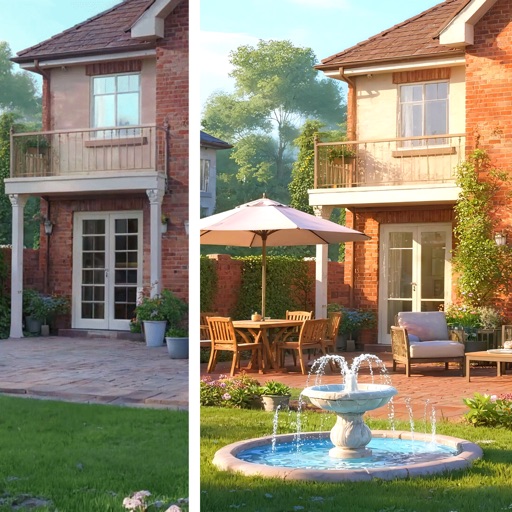 Garden AILandscape ideas, visualizedTry your garden
 An indoor-outdoor garden transition feels coherent when the first route is obvious, the threshold stays safe and clear, and a few colors or materials repeat across the view. Visual continuity does not require changing doors or rebuilding the house.
Editorially reviewed August 24, 2026.
This AI-generated comparison is visual inspiration, not a measured plan, specification, safety assessment, cost estimate, local approval, plant recommendation, or construction guarantee.
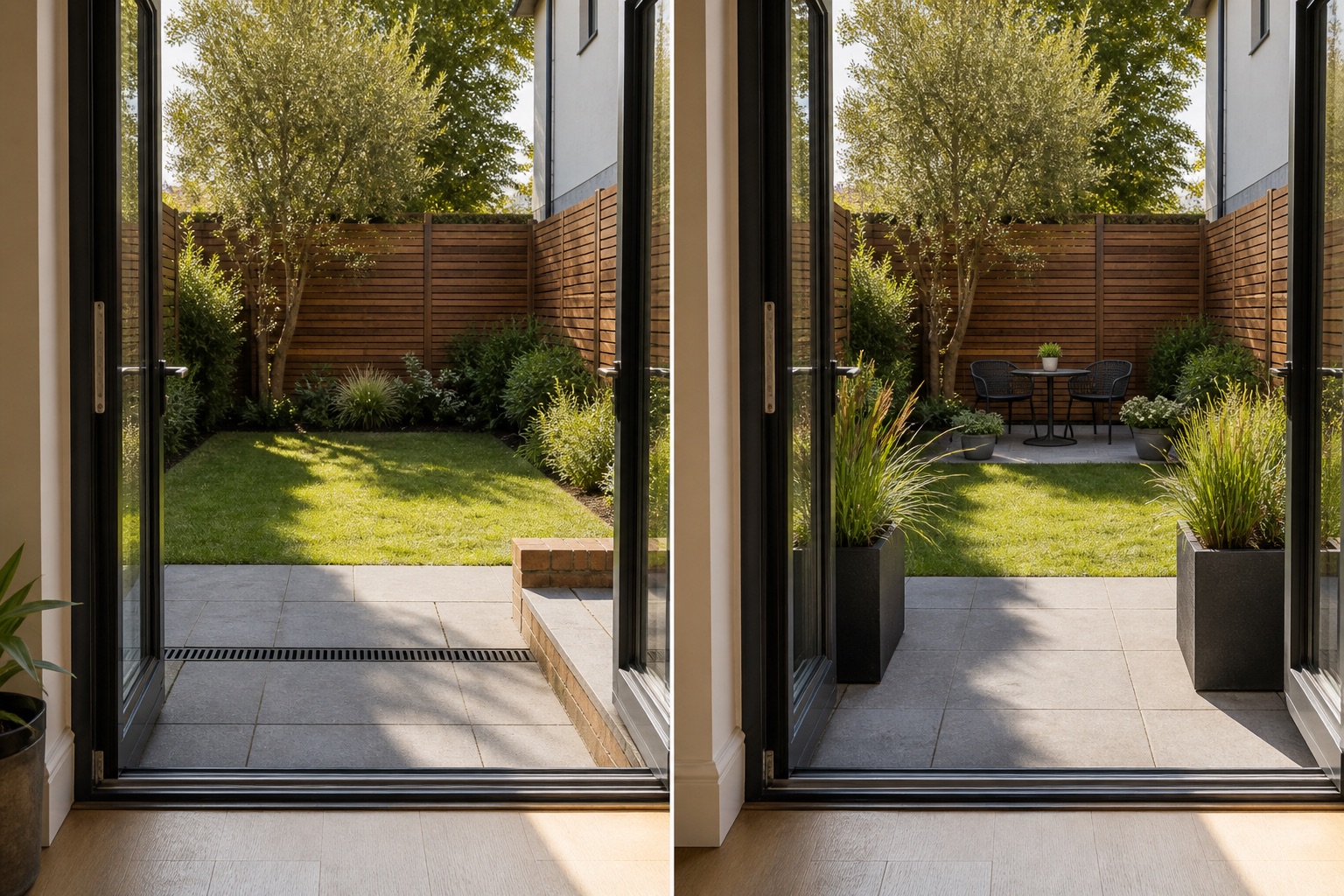
Record door swing, step, drain, mat, lighting and the first safe place to pause.
Let the path lead to one useful destination rather than dissolving into furniture or containers.
Carry a restrained color or texture into movable outdoor elements without pretending materials are identical.
The opening, door, threshold, step, drain, facade, boundaries, grade and camera remain unchanged.
Record doors, gates, paths, furniture movement, utilities, drains, roots, and maintenance access. Do not infer clearance from the image.
Note direct sun, shade, wind, overlooking, and views from inside across more than one time and season.
Locate falls, low points, downpipes, drains, and recurring wet areas. Preserve existing outlets.
Check permissions, product information, plant suitability, mature size, toxicity, invasiveness, upkeep, and applicable safety requirements.
Stop before altering a door, step, damp-proofing, drainage, lighting, structure, or accessibility condition without site-specific advice.
Repeat a color, align movable planters with the view, and keep a clear route from the threshold to one outdoor use.
No. Visual coordination can come from tone and rhythm; actual floor specifications depend on exposure, drainage and safety.
Keep the door swing, threshold, drainage, lighting and daily route unobstructed.
Upload a level, wide photo to compare restrained concepts before making physical changes.
AI-generated visualizations are concepts. Check local conditions and consult a qualified professional before construction or planting.