Choose the primary view
Stand at the door or most-used seat and decide which view matters first.
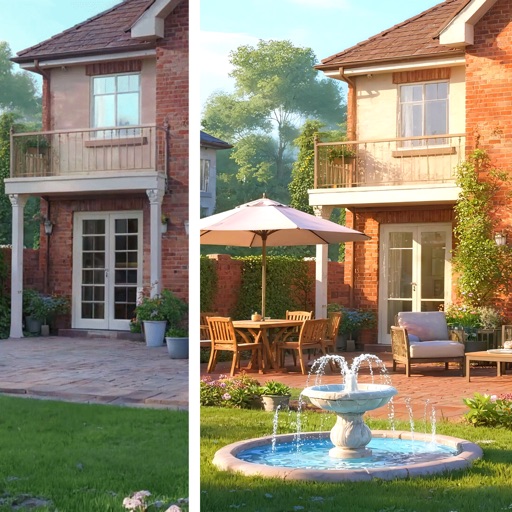 Garden AILandscape ideas, visualizedTry your garden
 A useful garden focal point is visible from the main approach, proportionate to the space, and supported rather than crowded by surrounding elements. Start with the view and route, then test one focal object or planting mass before adding secondary accents.
Editorially reviewed August 24, 2026.
This AI-generated comparison is visual inspiration, not a measured plan, specification, safety assessment, cost estimate, local approval, plant recommendation, or construction guarantee.
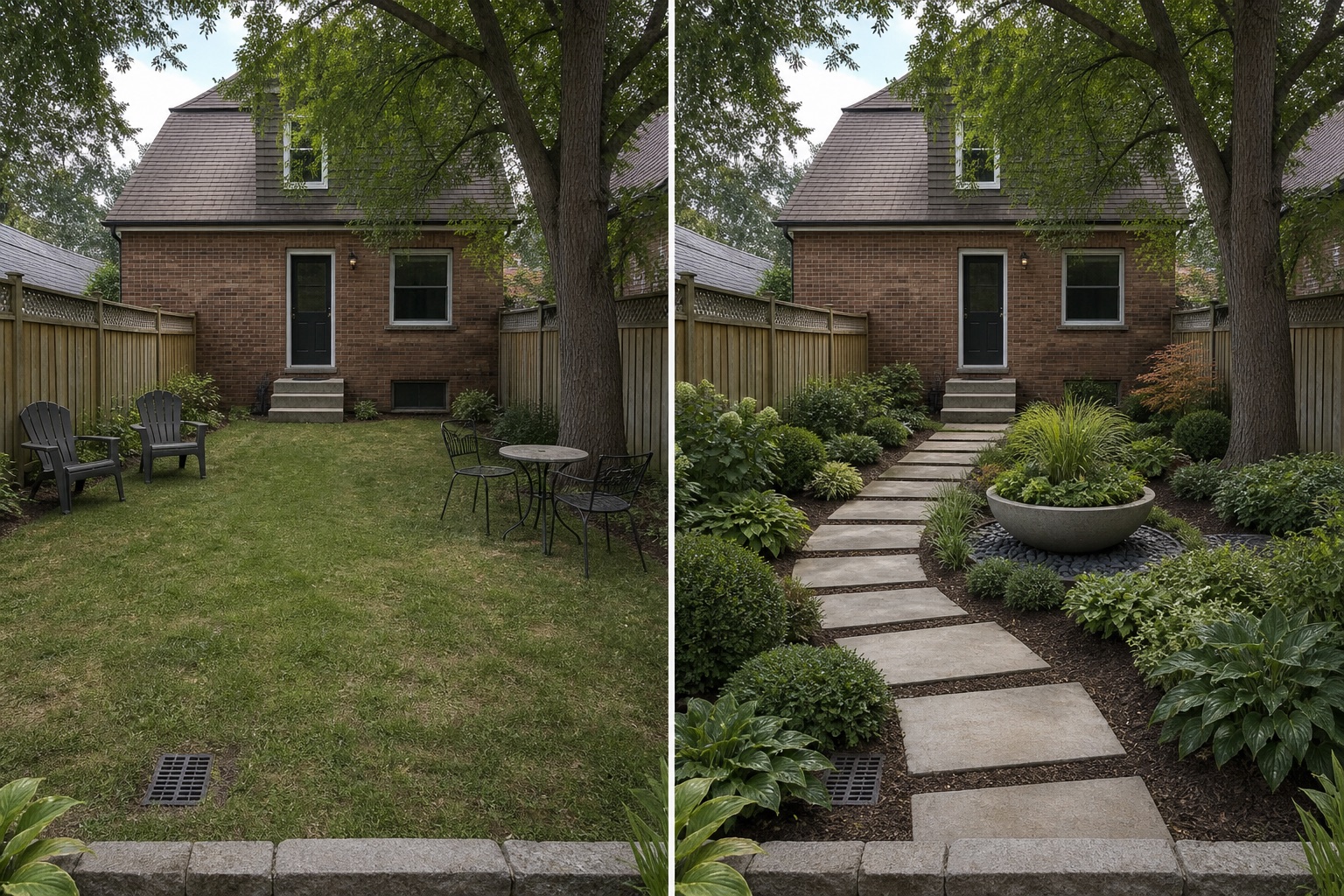
Stand at the door or most-used seat and decide which view matters first.
Use one movable planter, seat, existing tree, or object rather than several competing accents.
Repeat simple forms around the anchor while keeping the route and maintenance access legible.
The house, door, fence, mature tree, drain, grade, boundary and camera position remain unchanged.
Record doors, gates, paths, furniture movement, utilities, drains, roots, and maintenance access. Do not infer clearance from the image.
Note direct sun, shade, wind, overlooking, and views from inside across more than one time and season.
Locate falls, low points, downpipes, drains, and recurring wet areas. Preserve existing outlets.
Check permissions, product information, plant suitability, mature size, toxicity, invasiveness, upkeep, and applicable safety requirements.
Stop before installing a heavy object, fountain, wiring, footing, or feature that affects drainage, access, roots, structure, or local permissions.
A seat, container, existing tree, framed view, sculpture, or planting mass can work when it is visually clear and suits the real site.
Place it where it concludes or redirects an important view without blocking the route or hiding fixed constraints.
It can have a secondary accent, but one primary anchor usually creates a clearer composition.
Upload a level, wide photo to compare restrained concepts before making physical changes.
AI-generated visualizations are concepts. Check local conditions and consult a qualified professional before construction or planting.